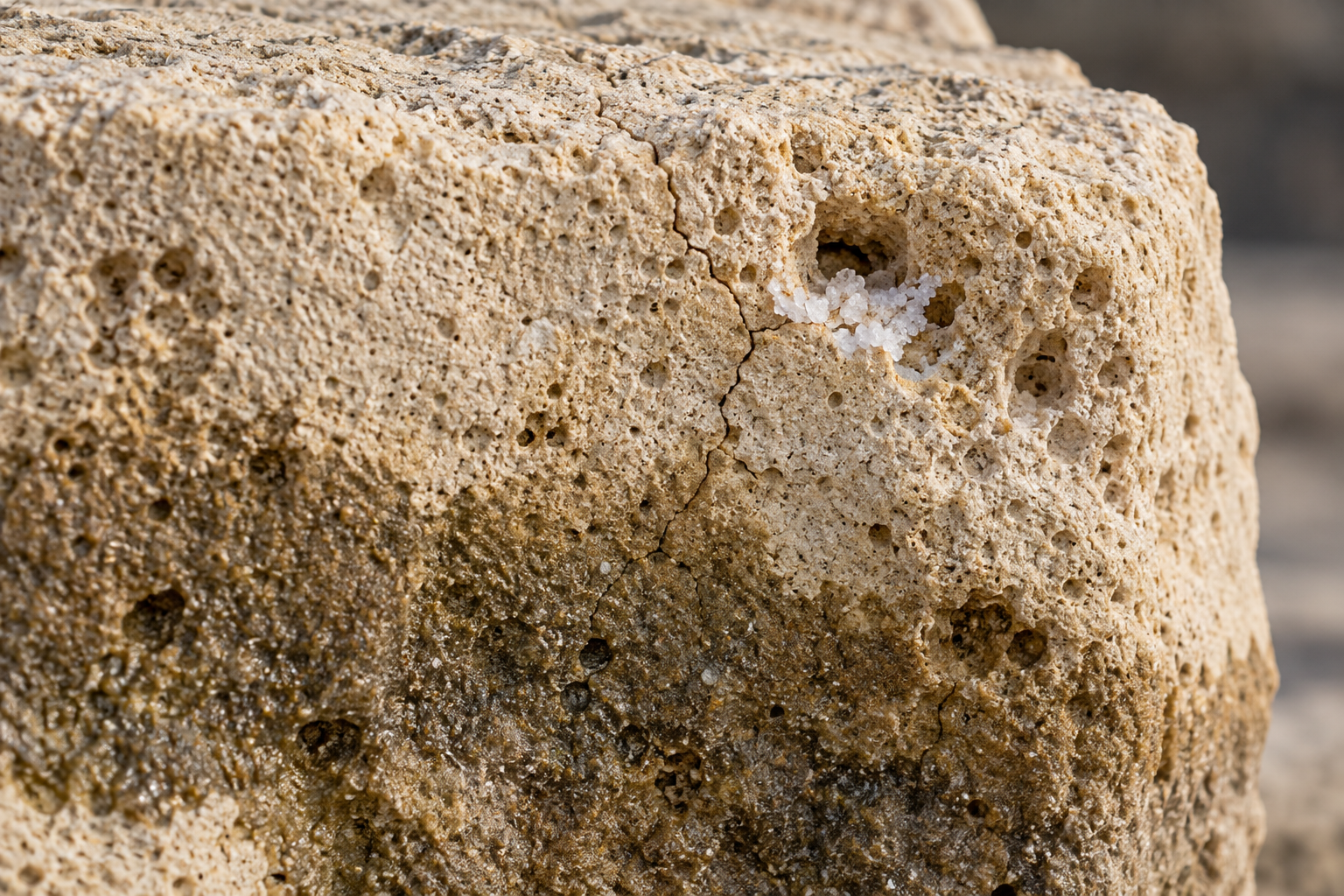
A pale crust along a stone's edge looks like the aftermath of something violent. It may be salt, left as water evaporated. A nearby hairline crack seems to complete the story: the salt must have split the stone. Yet the white material we can see is only the end of a journey through spaces we cannot see. To understand the crack, the first question is where the crystals grew.
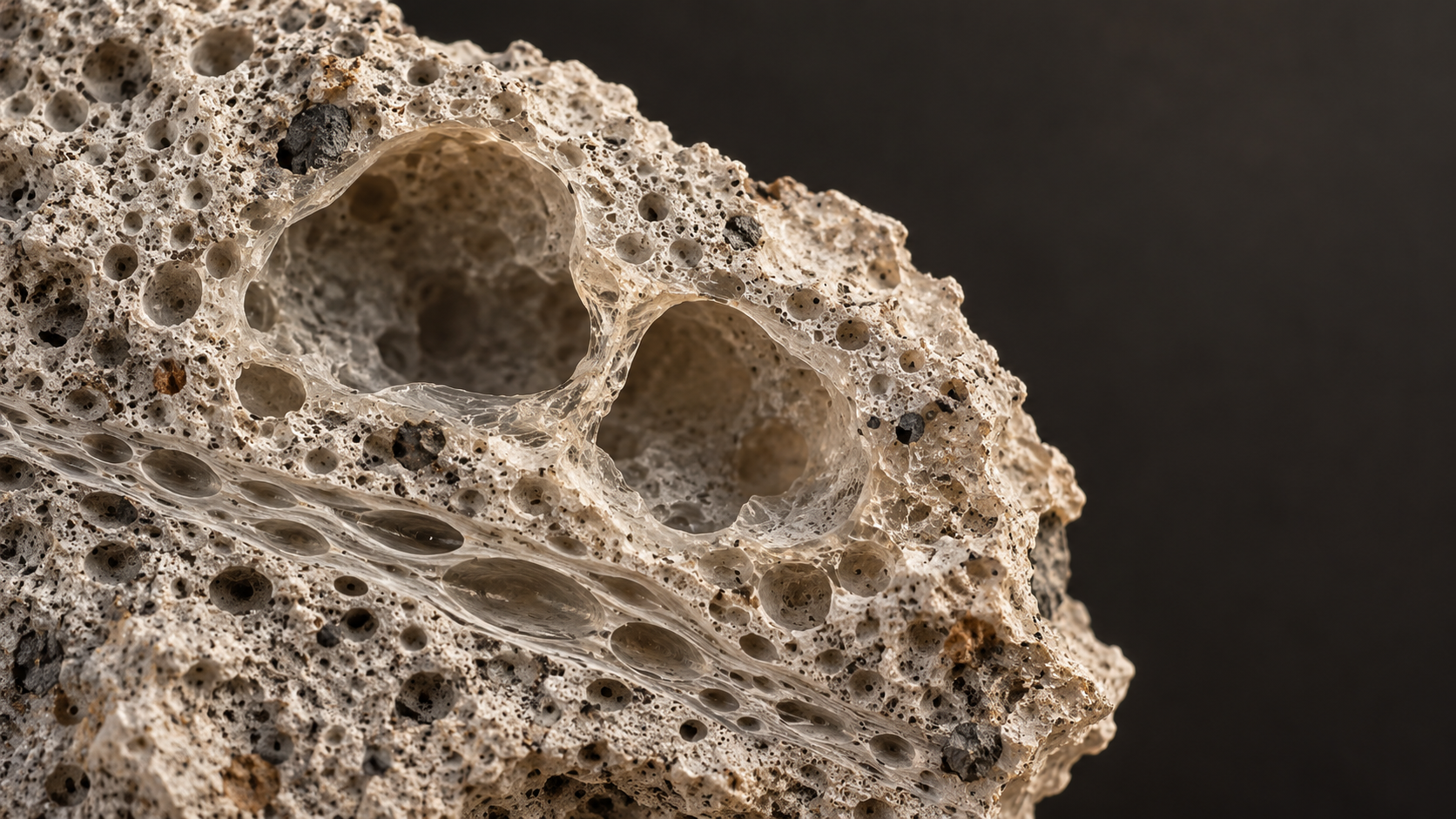
Stone is solid enough to carry a wall, but many kinds contain a network of pores. Water can enter that network, dissolve salts and carry them through it. As water leaves, the solution becomes more concentrated. Crystals may form at the exposed face, producing efflorescence, or beneath it, producing subflorescence. The distinction matters because a crystal growing in open air has room to extend, while one confined by a pore wall can press against the stone. Scrivano and Gaggero's experiments on four building limestones describe how the balance between capillary supply and evaporation helps set the place of precipitation. It is a moving boundary, shaped by the stone's connected pores and the weather outside.
That does not make every white crust benign. It can announce that soluble salts and water are moving through the stone; it may hide a damaged layer underneath. Nor does a crack beside a crust prove salt caused the crack. Water, heat, loads and prior weaknesses can also matter. The visible deposit is a clue to investigate, not a diagnosis.
The pressure is made in a thin film
The familiar picture is a crystal swelling until it wedges two grains apart. The actual mechanism depends on how a growing crystal stays fed with dissolved salt while it is pressed against a wall. In a 2016 microscale experiment, J. Desarnaud and colleagues watched alkali-halide crystals nucleate between confining plates and measured the force they exerted. A very thin liquid film between crystal and wall allowed growth under confinement. When the researchers made the walls water-repellent, they observed neither that film nor the same repulsive force. Their measured pressure differed between the salt systems they tested.
The plates were a controlled stand-in for a pore, not a measurement of every real stone. But they make the essential point unusually clear: salt needs a route for solution and a tight place to grow. The stress is not simply the mass of white material visible on a surface. A crystal may also grow toward an open space and exert little force on a wall. Whether local stress becomes a lasting crack depends on the stone's strength and on where repeated growth is concentrated.
Sodium sulfate adds a further complication. In Schiro, Ruiz-Agudo and Rodriguez-Navarro's original pore experiment, the researchers identified a metastable seven-water sodium-sulfate phase forming in subsurface pores and its transition toward the more stable ten-water phase, mirabilite. They linked the sequence to high solution supersaturation and crystallization pressure. The important idea is not that every hydrate change automatically cracks rock. It is that a particular path through dissolved and crystalline states can drive growth under pressure. The publication's accessible abstract supports that mechanism; it does not supply a universal pressure for every pore or climate.
A pore network chooses the battlefield
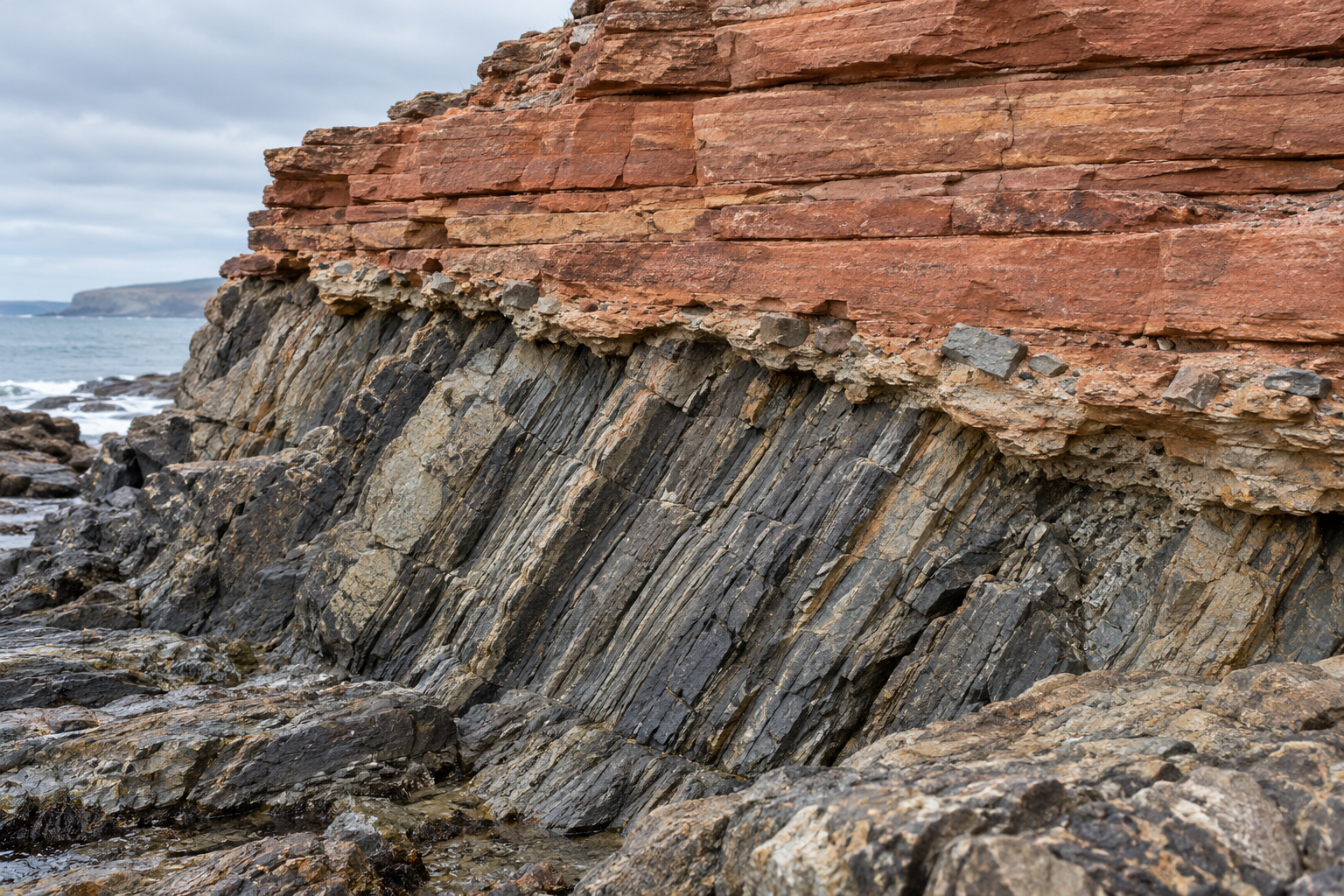
Two stones exposed to the same saline water need not fail in the same way. Their pores differ in width, connectivity and location, and a stone can contain weak veins alongside tougher blocks. Scrivano and Gaggero tested four limestones against five salt solutions, then examined changes in mass, water uptake, pore structure and surface material. The compact Breccia Aurora specimens resisted most of the tested damage. Two more porous Vicenza stones lost more material. Rosso Verona's compact nodules held up better than its more porous veins, where cracks concentrated. That last result is a useful corrective to any single number called “porosity”: the arrangement of openings can matter more than an average.
The salt mattered too. Sodium sulfate and sodium carbonate produced the highest weathering rates among the solutions in this experiment. The authors also observed chemical interactions with the carbonate stones, so a result here cannot be assigned to crystal pressure alone. Their rankings belong to these particular rocks and test conditions. A different stone, salt mixture or way of delivering water can reorder them.
The laboratory contrast is striking in Sato and Hattanji's humidity experiment. They first loaded tuff and two sandstones with one of three salts, then cycled air humidity from 20 to 98 percent every six hours at 20°C. During cycling, the stones received water only from the air. Under those conditions sodium chloride caused the strongest deterioration; the porous sandstone broke down after 100 cycles. Magnesium sulfate caused different forms of damage in the three rocks. Sodium sulfate produced obvious white efflorescence but almost no damage in that humidity-only test. The contrast does not overturn experiments in which sodium sulfate harms limestone. It shows that an abundant supply of liquid water and a swing in airborne moisture are not equivalent exposures.
Water returns, and the answer changes
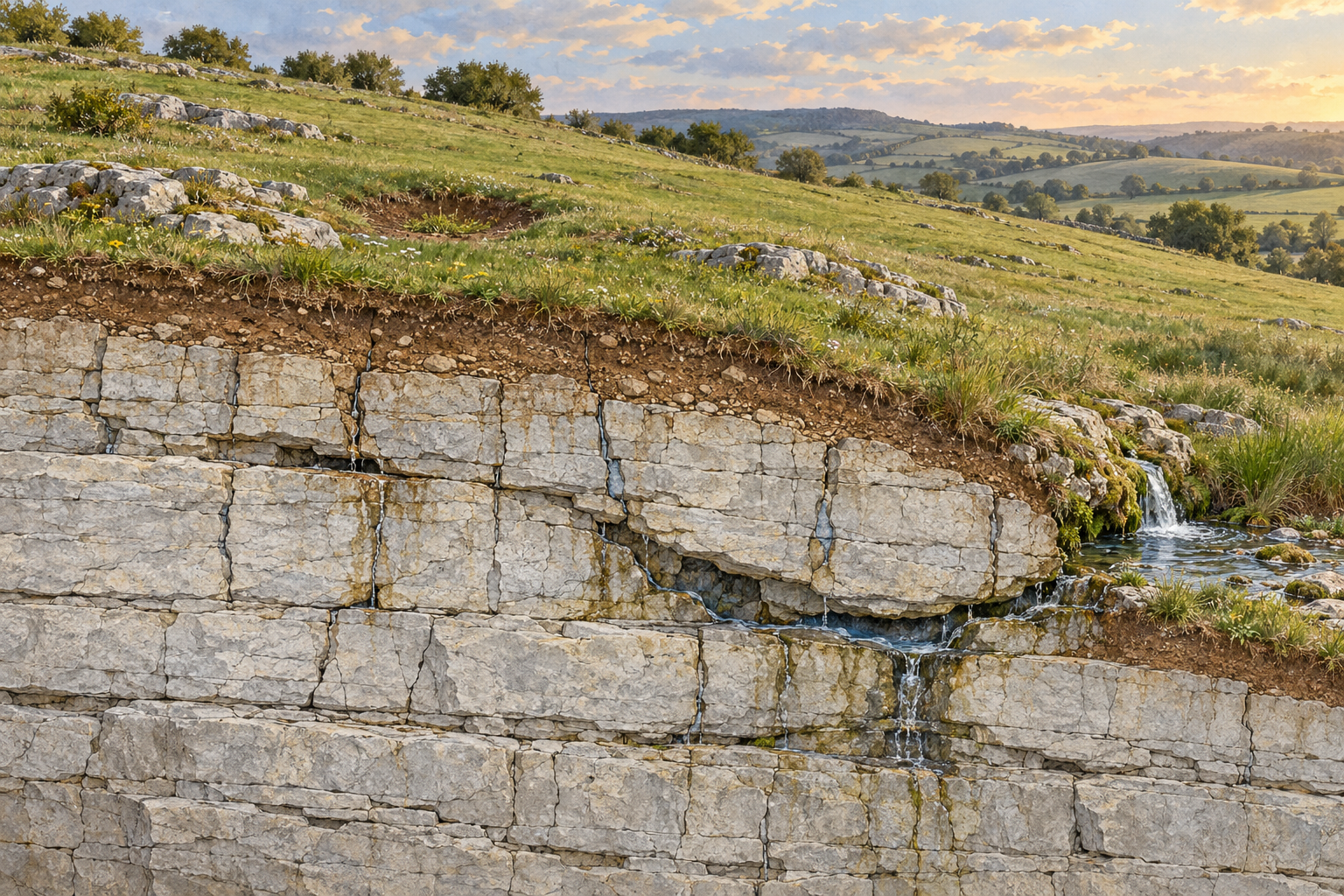
A wetting and drying cycle is often described as if it were a metronome: wet, dry, crack, repeat. Real stone is less orderly. Rain may rinse one face while another is fed by moisture from behind. A sheltered wall may avoid rain but absorb water vapour. A salt crust can dissolve during a humid spell and recrystallize later; the next drying front may settle at a different depth. Several salts can share the same pore water.
That last point has been tested rather than merely assumed. Godts and colleagues combined droplet and capillary experiments with climate analysis. For pure sodium chloride, dissolution generally took longer than crystallization in their tests. Their thermodynamic model put the equilibrium humidity of pure sodium chloride at 75.5 percent and that of one representative mixed-salt system at 65.5 percent. Those numbers describe the systems they examined, not a new threshold for all dirty stone. The team also found that predicted counts of salt cycles changed with how frequently climate measurements were sampled. A daily average can smooth away the short humid intervals in which a surface actually changes state.
We can now see why a weathering test can be both revealing and limited. The plate experiment isolates force. A capillary test makes solution travel through stone. A humidity chamber tests repeated moisture from air. Each answers a different question. None reproduces the full history of a wall: unknown salt loads, intermittent rain, repairs, changing shade and a pore network that damage itself can alter. Reading tests together gives a stronger account than declaring one salt “the worst.”
Conservation work therefore begins with a narrower set of questions. Where is water entering, and where can it leave? Which salts are present? Is the white material sitting on sound stone, or is a thin surface layer lifting? Has cracking advanced, and is it concentrated along a seam? An experimental treatment study on two limestones makes the need for specificity plain. The researchers tried to encourage sodium sulfate to crystallize at the surface. A combined hydroxyapatite and chitosan treatment reduced material loss in their accelerated tests, but the chitosan treatment alone did not deliver the same benefit and could raise local stress where coverage was uneven. Those are laboratory results for chosen stones and procedures, not instructions to coat a building.
The crack in the title is thus the last visible link in a longer chain. Salt must arrive in solution. Water must move or change state. Crystals must grow where the stone confines them, under conditions that let them press harder than the surrounding material can bear. Some grains loosen, a surface flakes, or an existing weakness lengthens. A white bloom can point toward that chain, but it cannot tell us by itself which link failed. The work is to follow the water into the stone before deciding what the surface means.
A thought worth keeping?