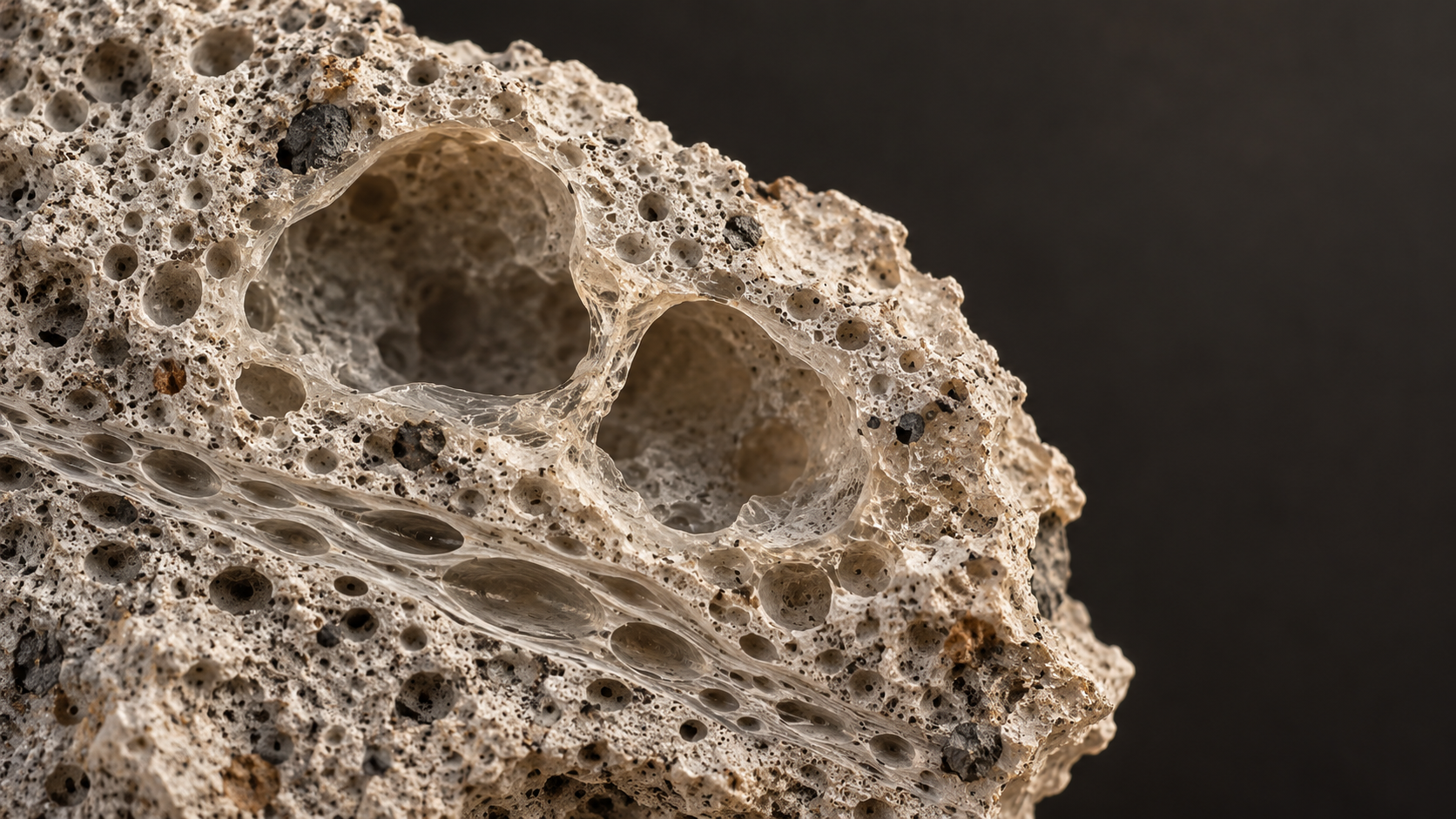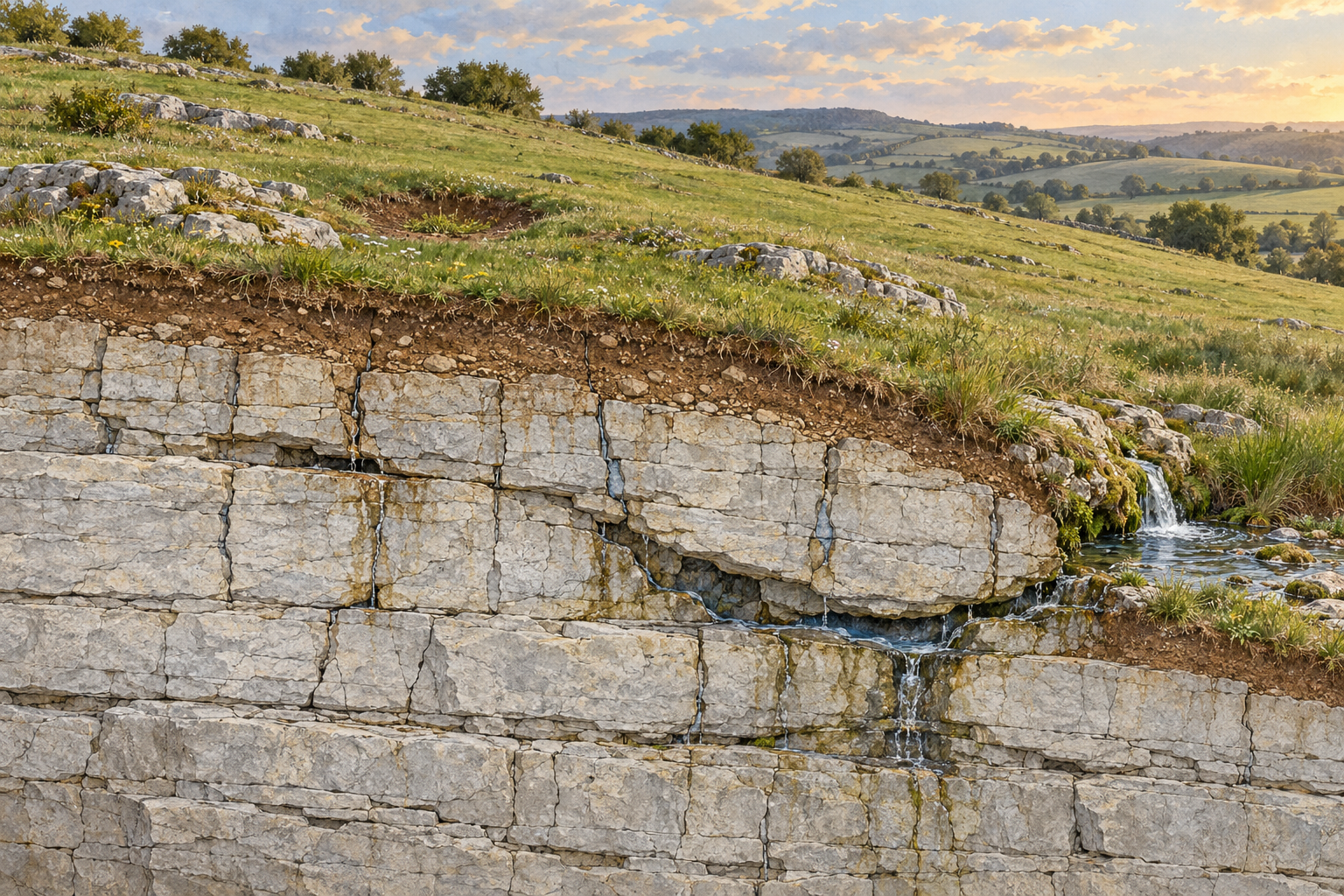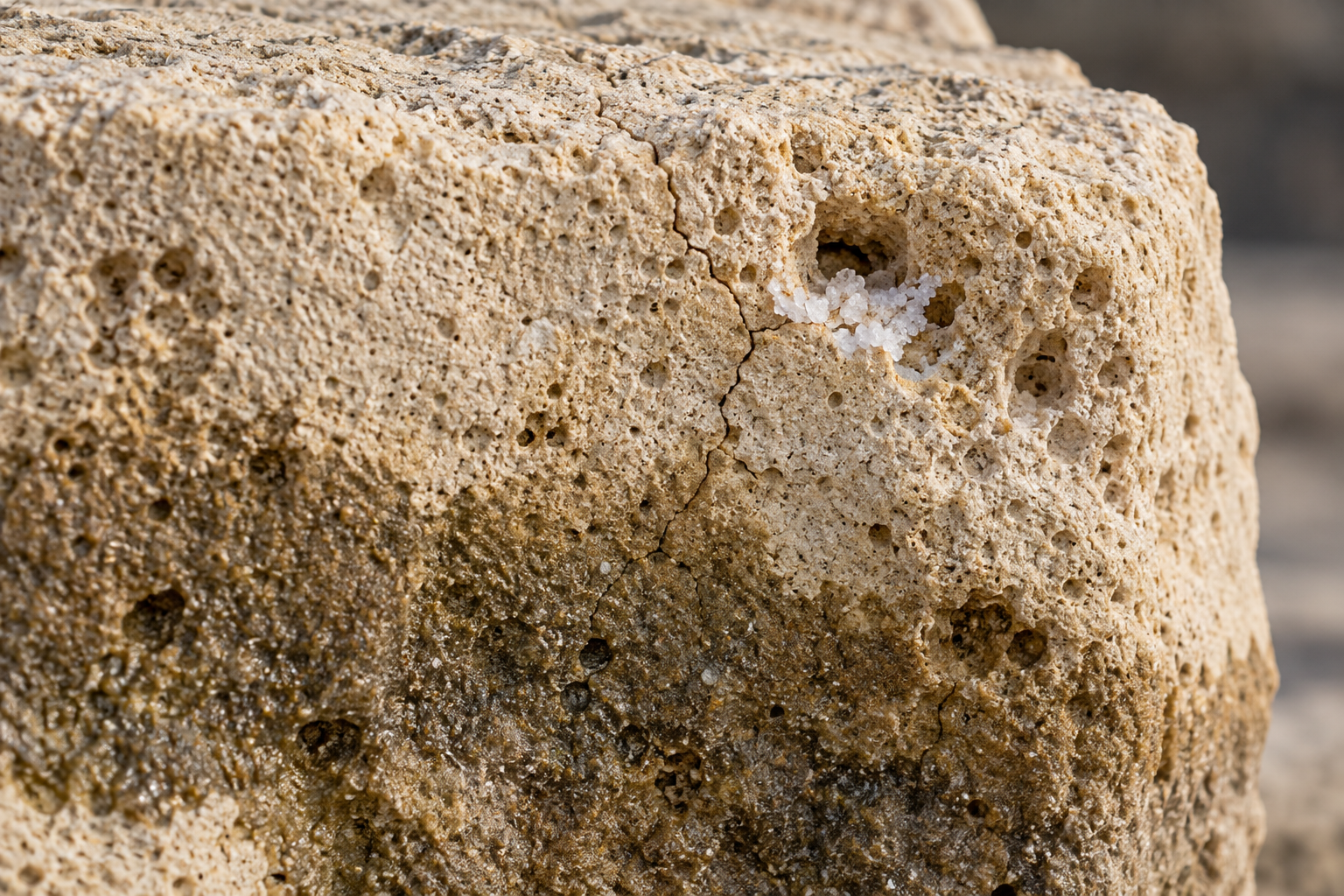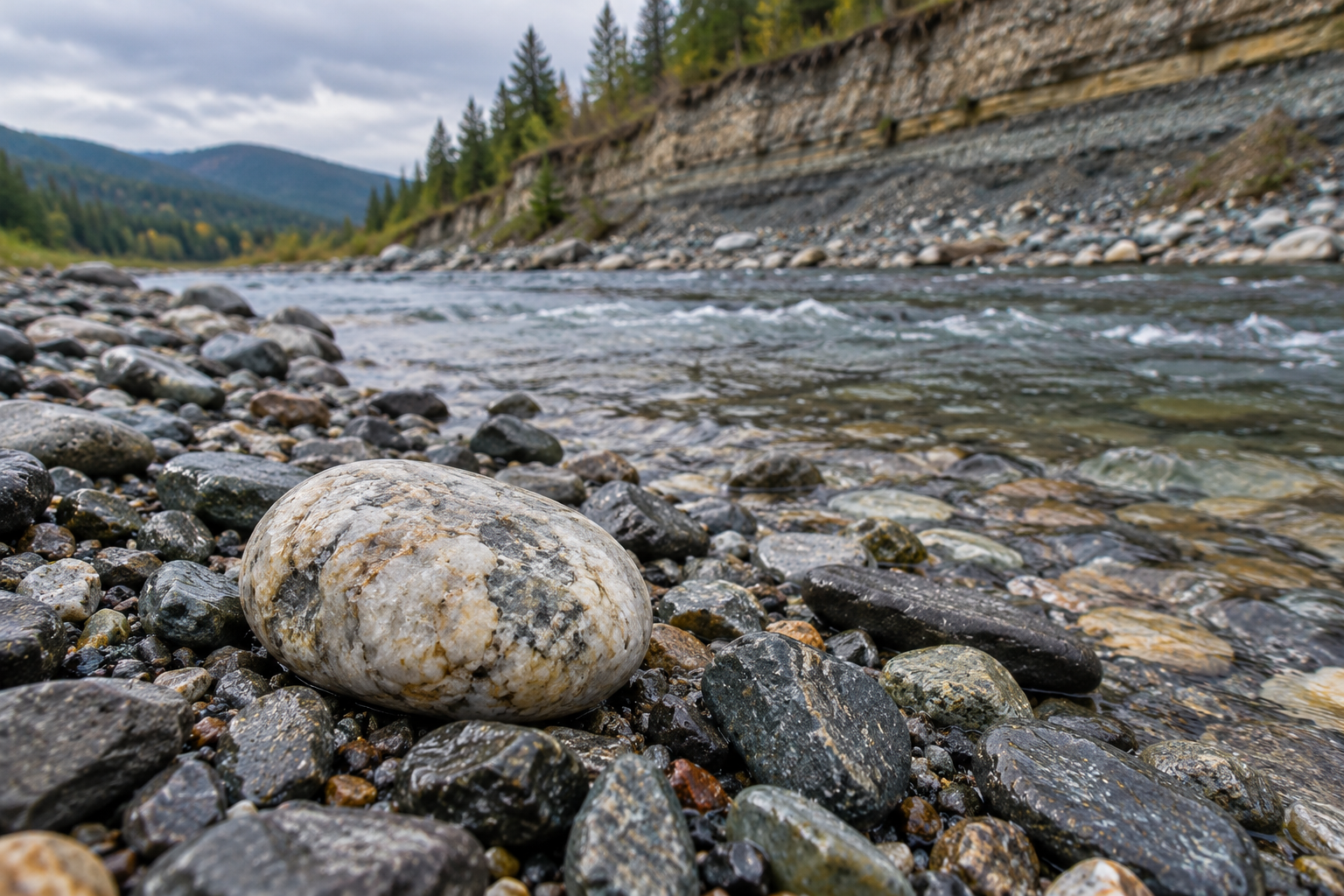
A rounded stone lifted from a riverbed invites a tidy story: it began sharp in the hills, rolled downstream, and grew smooth over many miles. Part of that story may be true. The stone's surface records collisions and wear. But it has no mile marks. Its rock type, original shape, pauses between floods and possible earlier lives in older deposits all affect the shape now in the hand.
The first useful distinction is between roundness and size. A pebble can lose its corners before becoming much shorter across its main dimensions. Gábor Domokos and colleagues tested this by tumbling limestone blocks and comparing the shapes with a numerical model. Their blocks first became convex as edges wore away, with little change to the lengths of their principal axes. Only later did those axes shrink more steadily. The laboratory stones made the process visible; the authors caution that natural streams add varied impacts, materials and sorting. A smooth outline can be an early change, not a measured distance.
Roundness is also different from overall form. A flat stone can have a smooth rim and still be flat; a long pebble can lose every sharp corner without becoming a sphere. Sneed and Folk measured these whole-stone proportions separately from corner wear. That distinction matters when a bedded rock breaks into flat pieces at its source. Its flatness may persist while its edges change, leaving two clues with different origins on the same pebble.
The kind of stone changes the answer
Rock does not wear at one rate. In a 1958 study of the lower Colorado River in Texas, Edmund Sneed and Robert Folk compared limestone, quartz and chert pebbles whose source areas could be traced along the river. Their limestone reached a limiting roundness within the first few miles. Quartz rounded more slowly. Brittle chert tended to spall, breaking bits away rather than becoming steadily smoother. The same river could thus give different outlines to stones that had traveled comparable distances.
In a modern experimental flume study, Mikaël Attal and Jérôme Lavé found abrasion-rate differences exceeding two orders of magnitude among rock types under simulated mountain-river flows. They observed attrition, which rubs away small amounts, alongside breaking and splitting, which can make new angular fragments. Higher impact speeds and joints in a rock favoured fragmentation. Their apparatus makes collisions repeatable, but it does not supply a universal conversion from roundness to kilometres. The very process that smooths one pebble can break another into a fresh-looking piece.
Size has its own complications. In the Texas study, even within a restricted pebble-size class, size affected the researchers' measures of form. In surveys of 21 coastal river basins in Peru, researchers measured about 500 pebbles at each site. Their median grain sizes often clustered around two to three centimetres, while simple linear relations between grain-size percentiles and basin-scale shear stress, slope or area were weak or absent. Some steep or high-flow basins departed from that pattern. This is a population comparison across basins, not a test of one pebble's journey. It warns against treating size alone as a simple gauge of a river's force.
Travel happens in episodes
Even a pebble that stays in one river need not move whenever that river rises. Researchers following tagged cobbles in an alluvial channel and a step-pool tributary found partial transport in every flood they observed: only some tracers moved in each event. The distances moved in a single flood varied widely. Over multiple events, cumulative travel related more strongly to particle size, and selective deposition helped arrange the tagged stones along the bed.
For the stone in the hand, a year of river history might mean several bursts of movement separated by long residence in a bar. Two stones lying together today could have arrived on different floods, from different tributaries, after different lengths of storage. Their present neighbours are not necessarily traveling companions. The tracer observations make this more than an imagined possibility, though their two monitored channels cannot stand for every river.
Nor does a downstream reach contain one uniform generation of stones. Tributaries add material. Banks and older deposits can release it again. In two Nepalese catchments, Prakash Pokhrel and colleagues measured granite and quartzite pebbles along roughly 50-kilometre reaches. Median roundness increased downstream, but every sampling place held a spread of shapes. Some upstream pebbles were as round as stones found much farther downriver. At one illustrated site about eight kilometres from the channel head, a particularly rounded pebble resembled pebbles at the 50-kilometre distance in the study's measure. An isolated smooth stone could therefore exaggerate the distance inferred from a group trend.
The rock comparison sharpened the warning. In those catchments, the researchers' fitted rounding coefficient for granite was nine times the one for quartzite. That coefficient belongs to their model and sampled material; it is not a universal property of every granite or quartzite pebble. The study also examined clasts released from ancient conglomerate, rock made from earlier rounded gravel. Some had already been worn in a previous river before entering the modern one. A stone can resume a journey with old roundness still on it.
The evidence improves when stones are read together with a map. Identify the rock type and its possible source beds. Compare many pebbles of the same material along a known channel. Look for tributaries, old gravel deposits and changes in flow. Then a shift in roundness or size can help test a transport history, with assumptions visible. That is how the Nepalese researchers use distributions and a calibrated model, rather than asking a single stone for a precise itinerary.
The rounded pebble still tells something worth hearing. Its corners have met other surfaces, and its present bed has received it. What it cannot say by itself is whether those collisions happened quickly or over a long, interrupted route, in this river or in one that vanished before it. Its smoothness is a surviving trace of movement, with part of the journey missing from the trace.
A thought worth keeping?